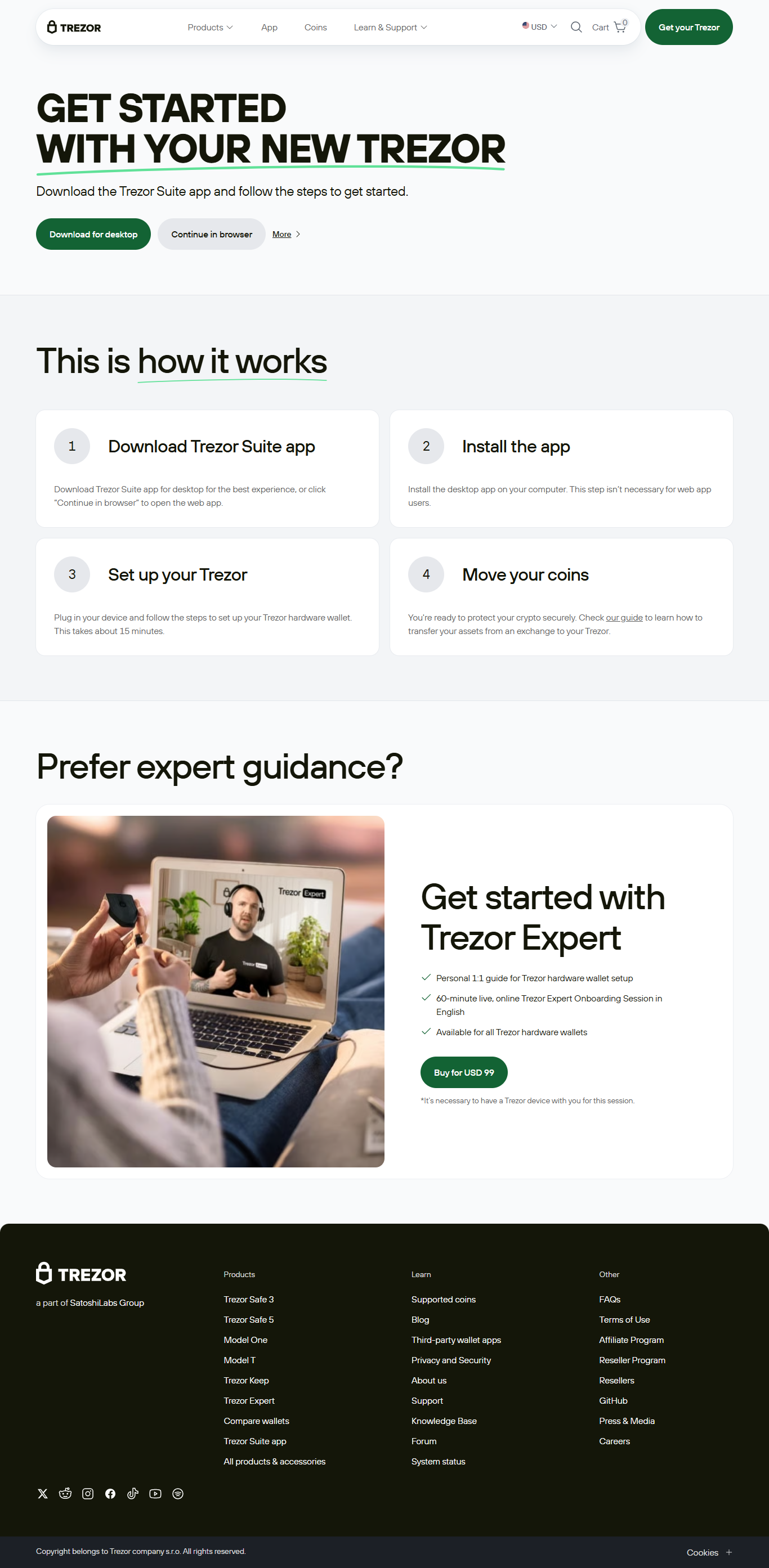
Trezor Bridge® — Connect Your Trezor to Web Browsers
Trezor Bridge® is an essential connectivity component that enables seamless communication between your Trezor hardware wallet and supported web browsers. Designed and maintained by SatoshiLabs, Trezor Bridge acts as a secure background service that allows browser-based wallet interfaces—such as Trezor Suite (Web) and other compatible third-party services—to detect and interact with your Trezor device reliably. Without Trezor Bridge, most browsers would be unable to establish a direct, trusted connection with the hardware wallet.
What Is Trezor Bridge?
Trezor Bridge is lightweight software installed on your computer that runs quietly in the background. Its main role is to translate browser requests into secure device-level commands that your Trezor hardware wallet understands. Modern browsers restrict direct USB communication for security reasons, and Trezor Bridge safely bridges this gap—hence the name.
Once installed, Trezor Bridge automatically starts when your operating system boots. When you plug in your Trezor device and open a supported website or web app, the browser communicates with Trezor Bridge, which then securely relays instructions to and from the device.
Why Trezor Bridge Is Important
The primary purpose of Trezor Bridge is secure and stable connectivity. While some browsers previously relied on browser extensions, Trezor Bridge provides a more robust and future-proof solution. It ensures:
Reliable detection of your Trezor device
Secure communication without exposing private keys
Compatibility across browsers like Chrome, Firefox, Edge, and others
Automatic updates to support new firmware and features
By handling USB communication outside the browser sandbox, Trezor Bridge reduces the risk of connection errors and improves overall user experience.
How Trezor Bridge Works
When you connect your Trezor hardware wallet to your computer using a USB cable, the operating system recognizes it as a USB device. However, browsers alone cannot safely interact with it. Trezor Bridge runs as a local service that listens on a secure local port.
Here’s a simplified workflow:
You connect your Trezor device to your computer.
You open a supported web wallet interface (for example, Trezor Suite Web).
The browser sends a request to Trezor Bridge.
Trezor Bridge forwards the request to the Trezor device.
The device asks for confirmation on its screen (PIN, passphrase, or transaction approval).
Approved responses are sent back securely through Trezor Bridge to the browser.
At no point are your private keys exposed to your computer or the internet.
Key Features of Trezor Bridge
1. Cross-Platform Support
Trezor Bridge is available for Windows, macOS, and Linux, ensuring broad compatibility for users across different operating systems.
2. Automatic Background Operation
Once installed, it runs silently in the background. You don’t need to launch it manually every time you want to use your Trezor.
3. Secure Communication Layer
All sensitive actions—such as signing transactions—happen on the Trezor device itself. Trezor Bridge only transmits encrypted commands and responses.
4. Browser Compatibility
It supports most modern browsers without requiring additional extensions, reducing clutter and improving stability.
5. Seamless Integration with Trezor Suite
Trezor Bridge works hand-in-hand with Trezor Suite Web, enabling portfolio tracking, transaction management, and device settings directly from your browser.
Installing Trezor Bridge
Installing Trezor Bridge is straightforward:
Visit the official Trezor website.
Download the Trezor Bridge installer for your operating system.
Run the installer and follow on-screen instructions.
Restart your browser after installation.
Once installed, you can verify that Trezor Bridge is running by opening a supported wallet interface and connecting your device.
Trezor Bridge vs. Browser Extensions
Earlier versions of Trezor connectivity relied heavily on browser extensions. While extensions worked, they often caused compatibility issues after browser updates. Trezor Bridge replaces this approach with a system-level service, offering several advantages:
Fewer connection errors
No dependency on specific browser extension stores
Faster support for new browser versions
Improved security model
This shift reflects Trezor’s long-term commitment to usability and security.
Security Considerations
Security is at the core of Trezor Bridge’s design. Importantly:
Private keys never leave your Trezor device
All confirmations require physical interaction with the hardware wallet
The bridge does not store personal data or transaction history
Open-source principles allow the community to review and audit its behavior
Users should always ensure they download Trezor Bridge only from official sources to avoid malicious software.
Common Use Cases
Trezor Bridge is commonly used for:
Accessing Trezor Suite Web without installing desktop software
Managing assets through compatible third-party wallets
Signing transactions securely in decentralized applications (where supported)
Updating or verifying device connectivity through a browser
For users who prefer not to install full desktop apps, Trezor Bridge offers flexibility while maintaining strong security.
Troubleshooting Connectivity Issues
If your Trezor device is not detected:
Ensure Trezor Bridge is installed and running
Restart your browser and reconnect the device
Try a different USB cable or port
Temporarily disable conflicting wallet software
Check that your operating system recognizes the device
Most connection issues are resolved by reinstalling Trezor Bridge or restarting the service.
Conclusion
Trezor Bridge® is a vital component for anyone using a Trezor hardware wallet with web-based applications. By acting as a secure communication layer between your browser and your device, it ensures reliable connectivity without compromising security. Easy to install, lightweight, and continuously updated, Trezor Bridge simplifies everyday crypto management while preserving the core principle of hardware wallets: your keys remain under your control.
Whether you’re a beginner accessing your wallet for the first time or an experienced user interacting with advanced web services, Trezor Bridge provides the dependable foundation that makes browser-based hardware wallet usage safe and seamless.